Appreciating Impermanence
Adventures in making ink with plants

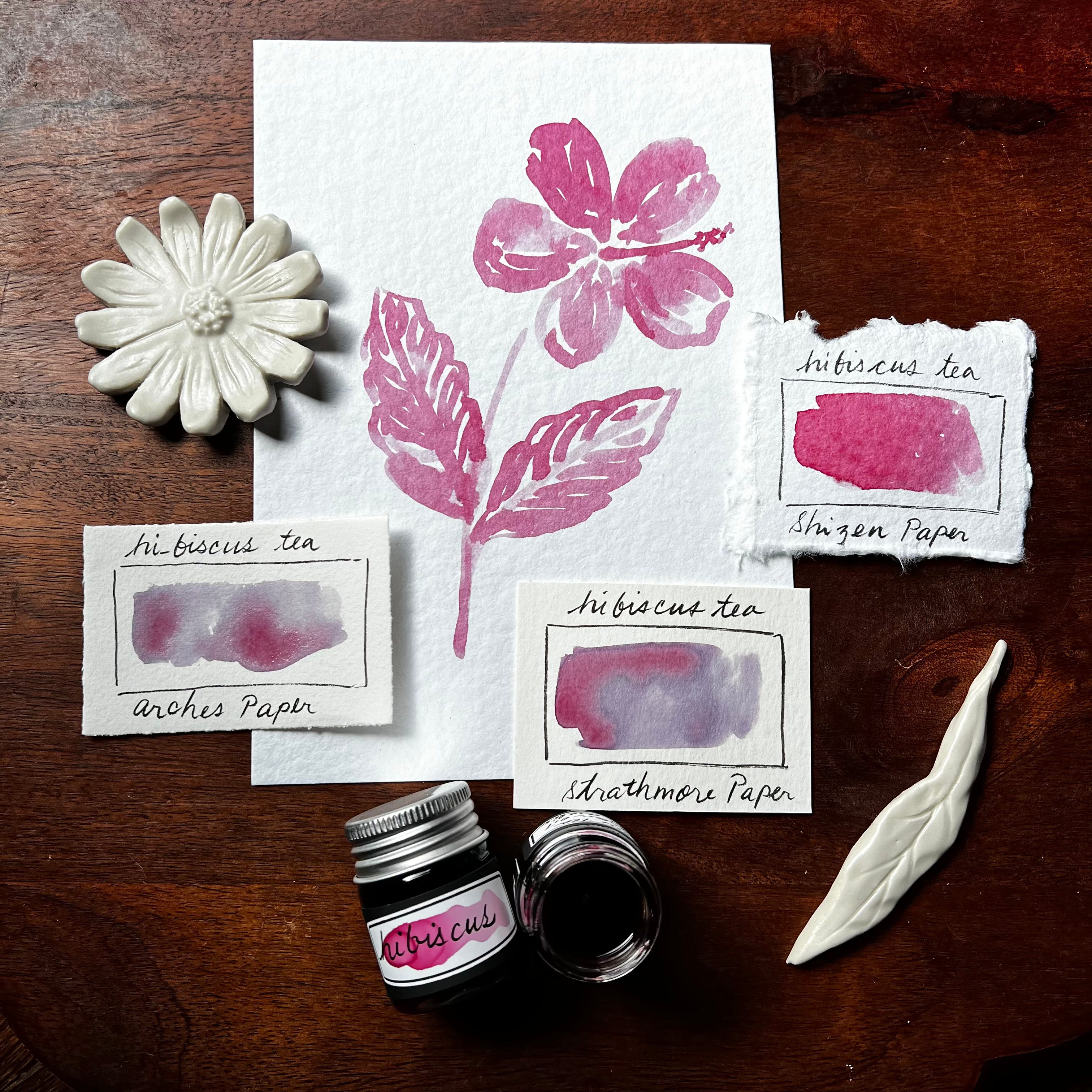
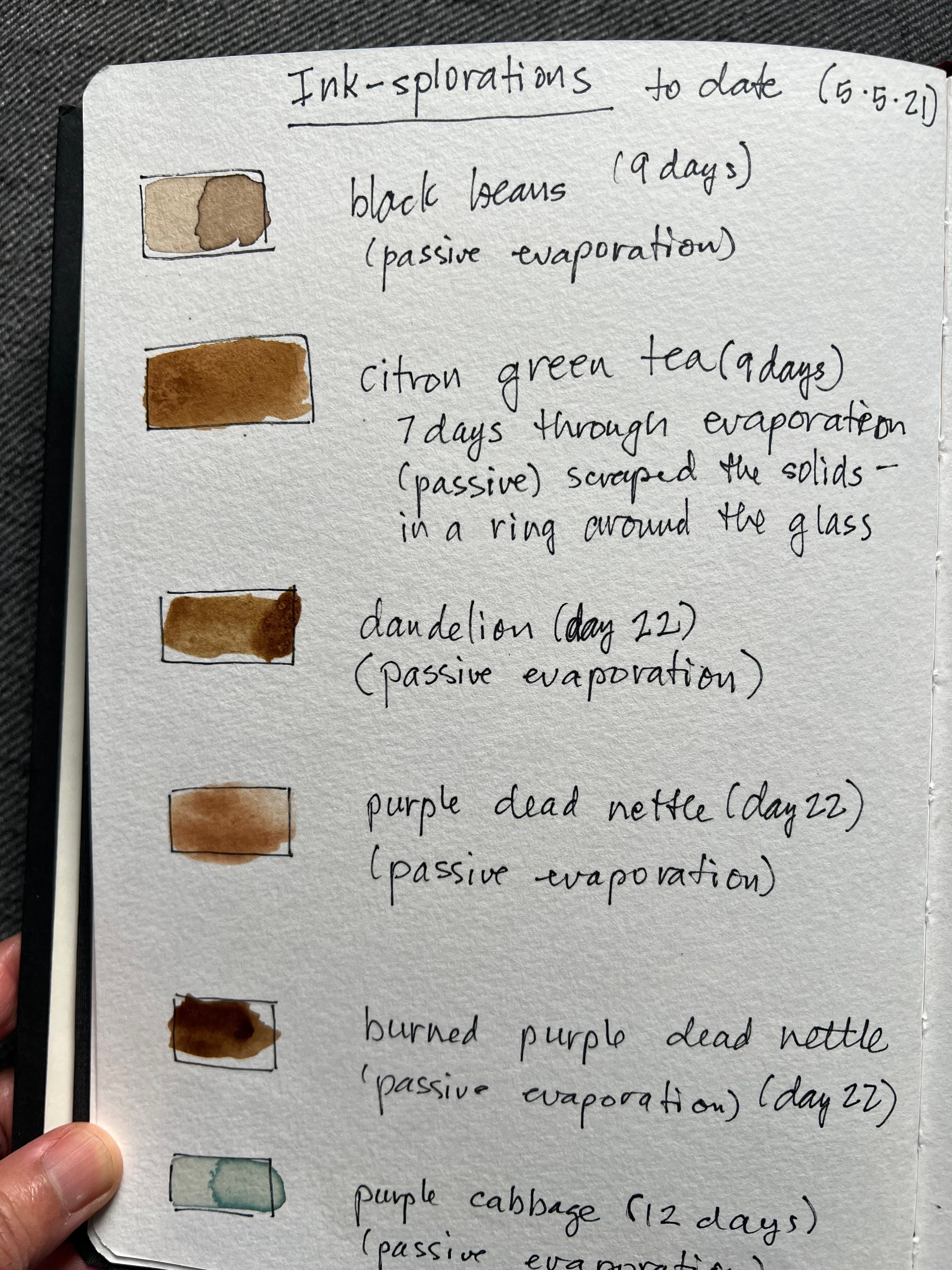
About five years ago, after stumbling on Make Ink: A Foragers Guide to Natural Inkmaking by Jason Logan, I fell in love with the idea and the adventure of making my own inks with plants. I started with plants that were local and easy to find - dandelions, sorrel, calendula, and purple dead nettle. My nature walks took on a new focus pulled along by the question: Could I make ink with this? How about this?
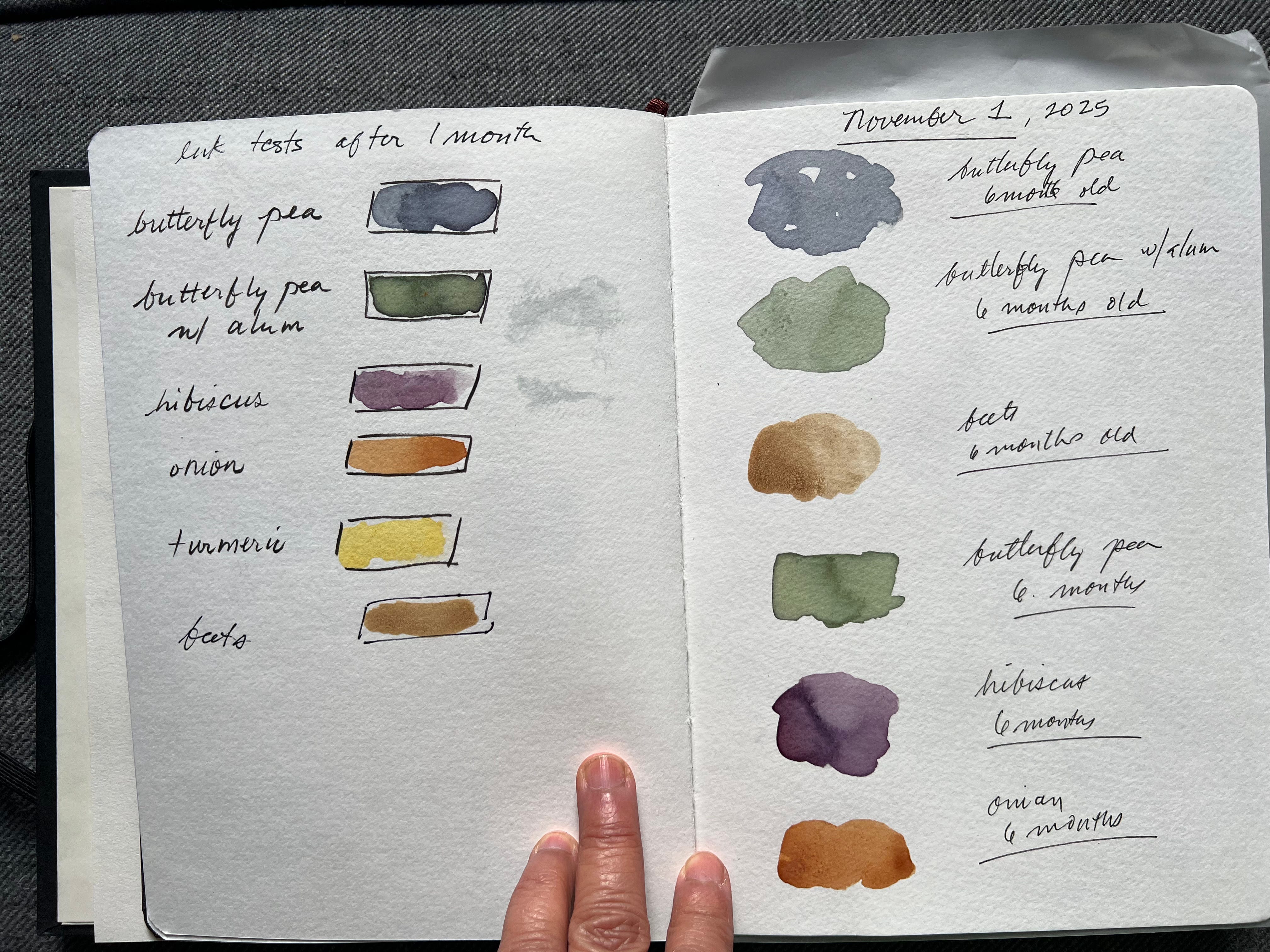
I also turned to my pantry and tried black tea, coffee, onion skins, beets, cabbage and turmeric. After a visit to a friend in Hawaii, I was turned on to butterfly pea flowers. This, in turn, reminded me of the hibiscus tea in my cupboard. Some experiments were flops. For example, I couldn’t figure out how to extract the butter yellow of dandelion or the mossy green of sorrel!1 Some of these experiments were successful. A magenta ink from hibiscus petals and the warm brown from onion skins was ridiculously easy and satisfying. And last year, I finally took some of my inks to market.
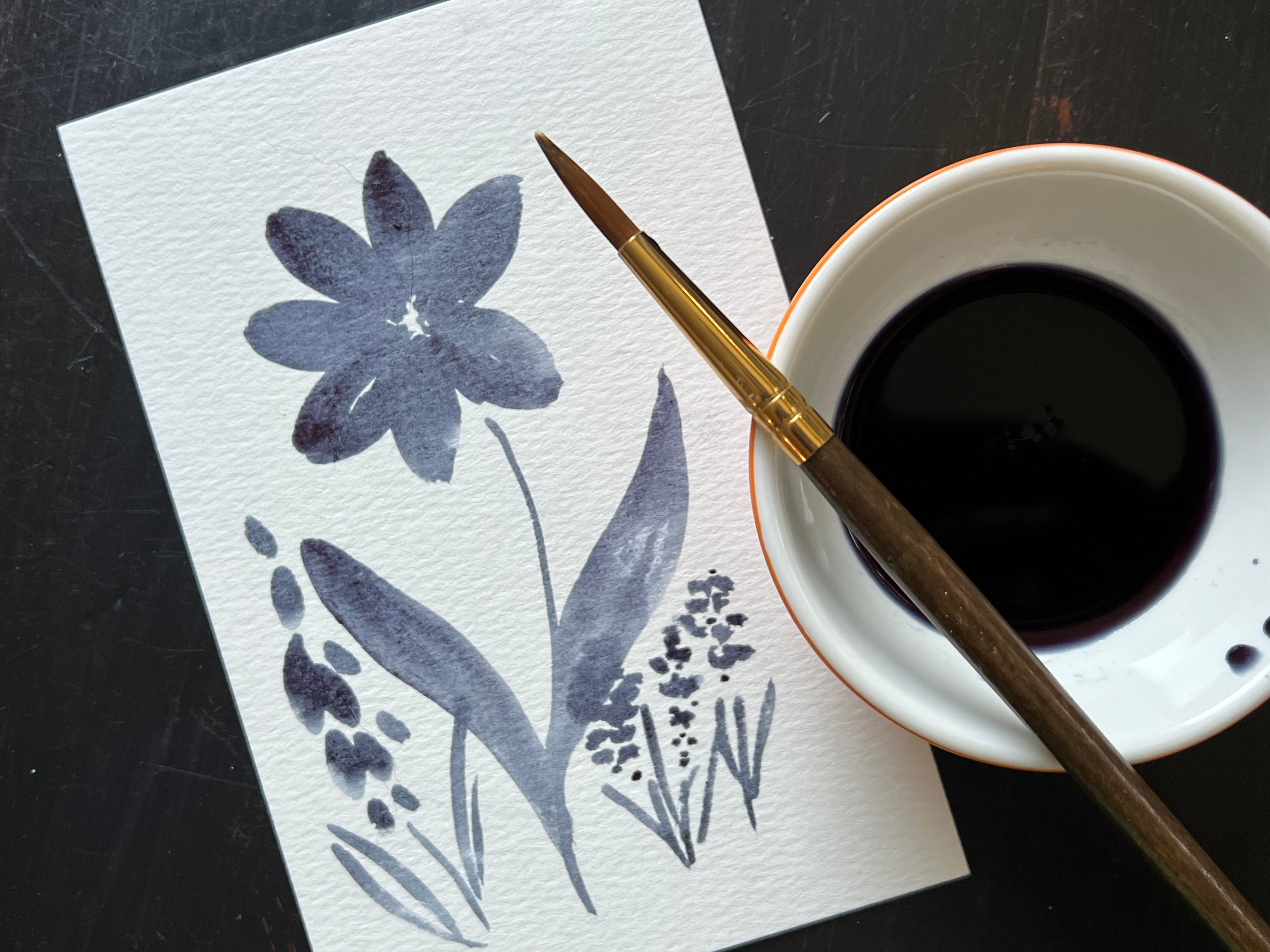
I was happy with what I’d discovered and delighted in the quirks of the inks - the seemingly magical interactions between paper, plant, and ph!2 I was excited to share this with craft market goers. I learned something very interesting in doing so. Some people shared my curiosity and appreciation for these inks. Hooray! But there were some who were very interested until I said the inks were not going to last forever, that they would fade over time. Why was this?
On one level, I totally understand. As an artist, I want the colors of my artwork to remain vibrant. Thank goodness for art materials made “archival” and for acid free paper. As a naturalist and nature journaler, however, I understand that very few things in nature last long. I love that my botanical inks will eventually fade. The science nerd in me looks forward to witnessing the change over time.3
I do want some things to last. I’m driving a 23 year old car. It’s had lots of repair work done on it to be sure but I'm grateful that I didn’t need to replace it entirely after only a few years. I’m grateful that the lifespan of my Border Collie is longer than a guinea pig but wish it were closer to that of a parrot. I love him a lot and I hope he stays well and happy with us for as long time. I despise the ecological impacts of fast fashion so I’m glad that what I do for a living means I don’t really need an ever changing wardrobe.4
And then there are my inks. Sure, it would be great if they lasted as long as archival paints5 but they won’t. I can rail against that in frustration or learn to accept it. Here’s a short passage in Make Ink that I greatly appreciate:
Ink Is Alive
Stop worrying about how long your color will last in its current state and start delighting in the way it changes.
You know who else is alive? We are! And, as someone who is well past the half century mark in age, I like to play with that passage and say to myself. “I am ALIVE! Stop worrying about how long your body will last in its current state and start delighting in the way it changes.” A very hard thing to do, I admit. Every morning, I get out of bed stiffly, with a little grunt and groan. If I sit for too long the hips will tell me! The changes all seem, at times, to be going in the direction of decay! And they are! In the long term. But in the short term…I’ll do my stretches. I’ll take my walks. I’ll do my gentle workouts and I’ll remind myself that even pain is not permanent. Everything changes and even at 56 I can get stronger than I am today if I exercise.
This year I’m going to try to make walnut ink. I will offer this ink for people who desire a more long lasting ink but I will continue to offer the other inks for those you share my appreciation of their impermanence.
My ink making practice is fairly new. I have yet to discover what my work will look like after 3 years! Since we have color photography, I look forward to taking photographs that document how they change!
If you want to make your own inks, I highly recommend Jason Logan’s book, Make Ink. I also like The Organic Artist: Make Your Own Paint, Paper, Pigments, Prints, and More from Nature by Nick Neddo.
Do you make your own inks too? What do you make them with? What colors have you created? I’m in search of a source of green that is cheap and easy to find and doesn’t need alum to make it turn green. I’m eager to know your tips!
Thank you so much for reading!
A Wild Braid Nature Journal is part of A Wild Braid. The mission of A Wild Braid is to help people experience rest and build resilience through nature journaling, guided nature walks, art, learning and community. Rest and resilience, in turn, makes it possible for us to show up for the people, beings, and planet that we care about.
A Wild Braid is a one-BIPOC-woman owned small business located on Occupied Duwamish and Coast Salish Territory, also known as Seattle, Wa. If you are in my area, the best way to support my work is to take a class. To find a class near you check out my events calendar.
You can also make a donation of any size at www.awildbraid.com/support-donate.
This publication is free! You are welcome to share this post with friends.
Subscribe so you don’t miss the next post!
Dandelions gave me a thin transparent yellow and sorrel was vibrant initially but the solids settled and lost their vibrancy in only a week.
Adding alum to butterfly pea, for example, yielded a green!
Some of the changes happen right before your eyes! As hibiscus ink dries, for example, it changes from a magenta to a purple.
Most days I work in sweats.
A quick google search told me that archival paint can last close to 100 years. There are other factors to consider if you want your work to last a long time.
I loved that book, Make Ink! It is one of my favorite books of all time. I made walnut ink a few years ago and still have several bottles left. I need to use them up...maybe I'll come up with some challenges this year to do it.
Love all of your inks!
I love your insights here Alma! Have you seen the documentary about ink? It's called the Colour of Ink and should be available for free online through the Canadian National Film Board.